

 RUO · ≥99% HPLC
Vesilute
≥99% HPLC purity · certificate of analysis on request
€79.00
plus shipping · free from €250
- Same-day dispatch from the Netherlands when paid before 14:00 CET
- ≥99% HPLC – lab reports
- Payment – SEPA bank transfer or crypto
- Discreet, tracked parcel – free shipping from €250
- 20 mg · lyophilized powder
- ≥99% HPLC purity · certificate of analysis on request
- Same-day dispatch from the Netherlands · free shipping from €250
Buy Vesilute at Pepcore: Vesilute as lyophilized powder (20 mg), ≥99% HPLC purity, dispatched from the Netherlands the same business day. Vesilute is a short peptide bioregulator, a small chain of amino acids from the Khavinson family of low-molecular-weight peptides. It is best known for its research focus on bladder and urinary tract tissue, and its tissue-specific targeting is what sets it apart.
Buy Vesilute: key facts
- Available amounts: 20 mg
- Purity: ≥99% by HPLC – certificate of analysis (HPLC and MS) on request
- Form: Lyophilized powder
- Price: from €79.00
- Dispatch: same business day from the Netherlands when paid before 14:00 CET (Mon–Sat)
- Shipping: tracked across Europe – free from €250
- Payment: SEPA bank transfer or crypto (USDC, USDT, Bitcoin)
Vesilute at a glance
It also sits within a well-studied group of short peptides, with work exploring how these molecules may guide gene activity inside specific tissues (Khavinson and Anisimov, 2009, Advances in Gerontology). That background is why it appears often in this line of laboratory study.
Research Applications
- Bladder and urinary tract research
- Tissue-specific peptide studies
- Gene-activity and transcription research
- Khavinson short-peptide bioregulator models
Supplied as a lyophilized powder for stability.
What is Vesilute?
The short-peptide bioregulator framework was developed at the Saint Petersburg Institute of Bioregulation and Gerontology under Vladimir Khavinson and colleagues. Beginning in the 1970s, this research program characterized tissue extracts from various organs and progressively isolated short peptide fragments that appeared to influence gene-expression patterns within their tissue of origin. Vesilute belongs to this lineage of tissue-derived short peptides, with a research focus on urinary tract and bladder biology.
Research on Khavinson-school bioregulators expanded throughout the 1990s and 2000s, with multiple publications proposing that di-, tri-, and tetra-peptide sequences can interact with DNA promoter regions in a sequence-selective manner. This model positions short peptide bioregulators as research tools for studying tissue-specific transcriptional programs in cell-culture and animal-model systems. Vesilute is referenced in this context as a urinary-system-directed compound.
Vesilute occupies a defined position within the Pepcore bioregulator catalog as a research tool for urinary epithelial and bladder-tissue investigations. It is typically studied in parallel with other organ-directed bioregulators in cell-culture and gene-expression research workflows, supporting comparative analysis across the bioregulator family.
Vesilute: structure and specifications
| Peptide Class | Khavinson-school short peptide bioregulator (urinary tract directed) |
|---|---|
| Amino Acid Sequence | Sequence available on request |
| Molecular Formula | C₉H₁₄N₂O₇ |
| Molecular Weight | ~262.2 g/mol |
| Available amounts | 20 mg |
| Form | Lyophilized powder |
| Purity | ≥99% HPLC |
| Storage | −20 °C, dry and protected from light |
| Use | Laboratory research only (RUO) |
Vesilute in laboratory research
Sequence-Selective DNA Interaction
Vesilute is studied within the Khavinson-school framework that proposes short peptide bioregulators interact directly with DNA in a sequence-selective manner. In this research model, short peptides are examined for their ability to bind specific regions within promoter sequences and influence transcriptional initiation in cultured cell systems and tissue-extract preparations.
Tissue-Specific Gene Expression Modulation
In urinary epithelial research models, Vesilute is investigated for its influence on gene-expression patterns associated with epithelial cell turnover, barrier-function biology, and stress-response signaling. Research designs typically use cultured bladder or urothelial cell lines to characterize expression changes under controlled laboratory conditions.
Cellular Renewal and Differentiation Research
Vesilute is examined for its influence on proliferation and differentiation markers in urinary tract research models. Investigations focus on standard biomarkers of epithelial renewal, including cytokeratin profiles, junctional proteins, and proliferation indices, providing a quantitative framework for evaluating peptide influence on tissue-renewal pathways.
Comparative Bioregulator Profiling
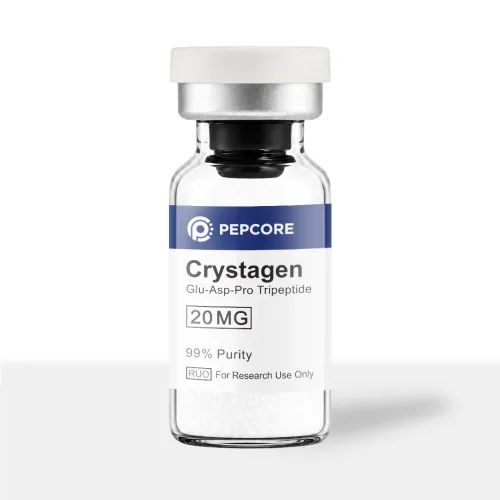
Within the bioregulator research family, Vesilute is studied alongside organ-directed peers such as Prostamax, Crystagen, and Cartalax. Comparative profiling examines the specificity of each peptide for its proposed target tissue, contributing to the broader research framework that supports the tissue-specificity hypothesis of short peptide bioregulators.
Conclusion
Vesilute is a short peptide bioregulator positioned within the Khavinson-school tradition of tissue-directed peptide research. It is studied for its proposed influence on urinary epithelial gene expression and tissue-renewal research models. Continued comparative work across the bioregulator family supports its use as a research tool in laboratories investigating tissue-specific transcriptional biology.
Reconstitution and storage
Vesilute is supplied as a lyophilized powder in a sealed glass vial. In the laboratory it is reconstituted with bacteriostatic water, added slowly down the inside of the vial and swirled gently until dissolved – never shaken. Our peptide calculator works out the concentration for your vial size, and the reconstitution guide explains each step.
Keep unopened vials cool, dry and away from light – frozen at −20 °C for long-term storage. Once reconstituted, keep the solution at 2–8 °C; our peptide stability guide lists typical shelf lives.
Buy Vesilute from Pepcore: shipping and payment
Orders paid before 14:00 CET (Monday–Saturday) leave our Netherlands warehouse the same business day in discreet, tracked packaging. Delivery takes 1–2 business days to the Netherlands and Belgium, 2–7 to Germany, France, Spain, Italy and Luxembourg and 3–8 to the rest of the EU; the UK, Switzerland and Norway take 5–10 days plus customs. Shipping costs from €8.49 and is free from €250 – see our shipping policy.
When you buy Vesilute at Pepcore you pay by SEPA bank transfer – we email you our bank details right after your order – or with crypto: USDC or USDT on Polygon, USDC on Base, or Bitcoin. No customer account and no card details are needed.
Frequently asked questions
What is Vesilute?
Vesilute is a short peptide bioregulator, a small chain of amino acids from the Khavinson family of low-molecular-weight peptides. It is supplied as a lyophilized powder for laboratory research use only.
What is Vesilute used for in research?
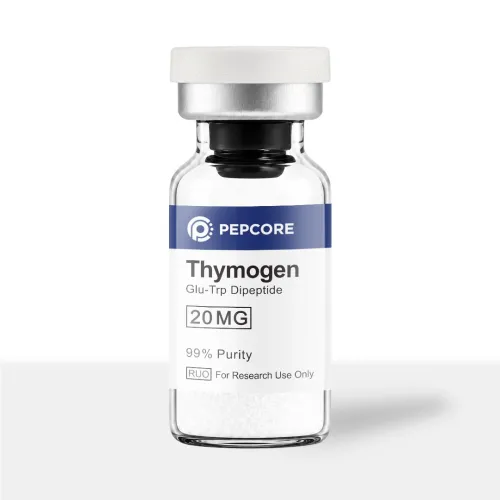
In research, Vesilute is studied in areas such as: Bladder and urinary tract research, Tissue-specific peptide studies and Gene-activity and transcription research. Related compounds in our Bioregulators range include Thymogen and Testagen.
Where can I buy Vesilute in Europe?
You can buy Vesilute online at Pepcore. We ship from the Netherlands to every European country with tracking, free from €250, and a certificate of analysis is available on request.
How is Vesilute reconstituted?
With bacteriostatic water, added slowly down the inside of the glass rather than onto the powder, then swirled gently, never shaken. Bacteriostatic water is optional when you order: you can add a 3 ml vial (+€4.99) or a 10 ml vial (+€12.99), or leave it out. Use our peptide calculator to work out the concentration for your vial size.
How is Vesilute stored, and how long does shipping take?
Lyophilized Vesilute is kept cool, dry and away from light. Once reconstituted, the solution is refrigerated at 2 to 8 °C, see our peptide stability guide. Orders leave the Netherlands the same or next business day: 1 to 2 business days to the Netherlands and Belgium, 2 to 7 to Germany, France, Spain, Italy and Luxembourg, 3 to 8 to the rest of the EU, free from €250, see shipping.
Is Vesilute intended for human use?
No. Vesilute is sold exclusively for in vitro research and laboratory use. It is not a medicine, food supplement or cosmetic, and it must not be used on humans or animals.
Scientific references
- Khavinson VKh, Anisimov VN (2009). [35-year experience in research of peptide regulation of aging]. Advances in Gerontology. PubMed
- Khavinson VKh (2002). Peptides and Ageing. Neuroendocrinology Letters. PubMed
- Khavinson VKh et al. (2016). Short Peptides and Telomere Length Regulator Hormone Irisin. Bulletin of Experimental Biology and Medicine. PubMed
- Anisimov VN, Khavinson VKh (2010). Peptide bioregulation of aging: results and prospects. Biogerontology. PubMed
- Korkushko OV et al. (2011). Peptide geroprotector from the pituitary gland inhibits rapid aging of elderly people: results of 15-year follow-up. Bulletin of Experimental Biology and Medicine. PubMed
More studies: PubMed: Vesilute
Ready to buy Vesilute? Choose your amount above – orders paid before 14:00 CET ship the same day, and shipping is free from €250. For questions about Vesilute or a larger research order, write to us at info@pepcore.net.
For laboratory research use only – not for human or veterinary use. All Pepcore products are sold strictly as research materials for in vitro use. They are not medicines, supplements, foods or cosmetics. Sold only to adults aged 18 and over.
Related compounds

Vesilute€79.00
Add to cart